Saturday, February 21, 2015

two happy lovers


.


Two happy lovers make one bread,
a single moon drop in the grass.

Walking, they cast two shadows that flow together;
waking, they leave one sun empty in their bed.

Of all the possible truths, they chose the day;
they held it, not with ropes but with an aroma.

They did not shred the peace; they did not shatter words;
their happiness is a transparent tower.

The air and wine accompany the lovers.
The night delights them with its joyous petals.
They have a right to all the carnations.

Two happy lovers, without an ending, with no death,
they are born, they die, many times while they live:
they have the eternal life of the Natural.


–Pablo Neruda


.


Friday, February 20, 2015

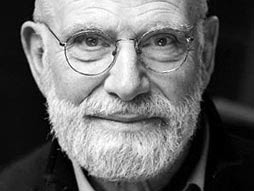
My Own Life - Oliver Sacks on Learning He Has Terminal Cancer


Oliver Sacks on Learning He Has Terminal Cancer
By OLIVER SACKS
Feb. 19, 2015

A MONTH ago, I felt that I was in good health, even robust health. At 81, I still swim a mile a day. But my luck has run out — a few weeks ago I learned that I have multiple metastases in the liver. Nine years ago it was discovered that I had a rare tumor of the eye, an ocular melanoma. Although the radiation and lasering to remove the tumor ultimately left me blind in that eye, only in very rare cases do such tumors metastasize. I am among the unlucky 2 percent.


I feel grateful that I have been granted nine years of good health and productivity since the original diagnosis, but now I am face to face with dying.


The cancer occupies a third of my liver, and though its advance may be slowed, this particular sort of cancer cannot be halted. It is up to me now to choose how to live out the months that remain to me. I have to live in the richest, deepest, most productive way I can. In this I am encouraged by the words of one of my favorite philosophers, David Hume, who, upon learning that he was mortally ill at age 65, wrote a short autobiography in a single day in April of 1776. He titled it “My Own Life.”

“I now reckon upon a speedy dissolution,” he wrote. “I have suffered very little pain from my disorder; and what is more strange, have, notwithstanding the great decline of my person, never suffered a moment’s abatement of my spirits. I possess the same ardour as ever in study, and the same gaiety in company.”
I have been lucky enough to live past 80, and the 15 years allotted to me beyond Hume’s three score and five have been equally rich in work and love. In that time, I have published five books and completed an autobiography (rather longer than Hume’s few pages) to be published this spring; I have several other books nearly finished.

Hume continued, “I am ... a man of mild dispositions, of command of temper, of an open, social, and cheerful humour, capable of attachment, but little susceptible of enmity, and of great moderation in all my passions.”
Here I depart from Hume. While I have enjoyed loving relationships and friendships and have no real enmities, I cannot say (nor would anyone who knows me say) that I am a man of mild dispositions. On the contrary, I am a man of vehement disposition, with violent enthusiasms, and extreme immoderation in all my passions.


And yet, one line from Hume’s essay strikes me as especially true: “It is difficult,” he wrote, “to be more detached from life than I am at present.”
Over the last few days, I have been able to see my life as from a great altitude, as a sort of landscape, and with a deepening sense of the connection of all its parts. This does not mean I am finished with life.


On the contrary, I feel intensely alive, and I want and hope in the time that remains to deepen my friendships, to say farewell to those I love, to write more, to travel if I have the strength, to achieve new levels of understanding and insight.


This will involve audacity, clarity and plain speaking; trying to straighten my accounts with the world. But there will be time, too, for some fun (and even some silliness, as well).


I feel a sudden clear focus and perspective. There is no time for anything inessential. I must focus on myself, my work and my friends. I shall no longer look at “NewsHour” every night. I shall no longer pay any attention to politics or arguments about global warming.


This is not indifference but detachment — I still care deeply about the Middle East, about global warming, about growing inequality, but these are no longer my business; they belong to the future. I rejoice when I meet gifted young people — even the one who biopsied and diagnosed my metastases. I feel the future is in good hands.


I have been increasingly conscious, for the last 10 years or so, of deaths among my contemporaries. My generation is on the way out, and each death I have felt as an abruption, a tearing away of part of myself. There will be no one like us when we are gone, but then there is no one like anyone else, ever. When people die, they cannot be replaced. They leave holes that cannot be filled, for it is the fate — the genetic and neural fate — of every human being to be a unique individual, to find his own path to live his own life, to die his own death. I cannot pretend I am without fear. But my predominant feeling is one of gratitude. I have loved and been loved; I have been given much and I have given something in return; I have read and traveled and thought and written. I have had an intercourse with the world, the special intercourse of writers and readers.


Above all, I have been a sentient being, a thinking animal, on this beautiful planet, and that in itself has been an enormous privilege and adventure.


Oliver Sacks, a professor of neurology at the New York University School of Medicine, is the author of many books, including “Awakenings” and The Man Who Mistook His Wife for a Hat.” (a great favorite at Love Is a Place)

A version of this op-ed appears in print on February 19, 2015, on page A25 of the New York edition with the headline: My Own Life.
 

© 2015 The New York Times Company


Wednesday, February 18, 2015

the true form of life


.


Death is the side of life that is turned away from us
and not illuminated. 


… The true form of life extends through both regions, the blood of the mightiest circulation pulses through both: there is neither a this-world nor an other-world, but only the great unity, in which the ‘angels,’ those beings who surpass us, are at home.


—Rainer Maria Rilke
Stephen Mitchell translation
from a letter to Witold Hulewicz dated 13 November 1925


.


Tuesday, February 17, 2015

joy to you, baby


.


Sunday, February 15, 2015

Supreme Court reverses course on doctor-assisted death; ban unconstitutional


.


Bruce Cheadle, The Canadian Press

OTTAWA - The Supreme Court of Canada has unanimously struck down the ban on providing a doctor-assisted death to mentally competent but suffering and "irremediable" patients.

The historic, groundbreaking decision from the country's top court sweeps away the existing law and gives Parliament a year to draft new legislation that recognizes the right of clearly consenting adults who are enduring intolerable suffering — physical or mental — to seek medical help ending their lives.

The judgment, which is unsigned to reflect the unanimous institutional weight of the court, says the current ban infringes on all three of the life, liberty and security of person provisions in Section 7 of the Charter of Rights and Freedoms.

It does not limit physician-assisted death to those suffering a terminal illness.

"For seriously and incurably ill Canadians, the brave people who worked side by side with us for so many years on this case — this decision will mean everything to them," said a visibly overjoyed Grace Pastine, the litigation director for the B.C. Civil Liberties Association.

The court clearly instructs parliamentarians that current laws "unjustifiably infringe (Section 7) of the charter and are of no force or effect to the extent that they prohibit physician-assisted death for a competent adult person who (1) clearly con- sents to the termination of life and (2) has a grievous and irremediable medical condition (including an illness, disease or disability) that causes enduring suffering that is intolerable to the individual in the circumstances of his or her condition."

The pressure will now be on Parliament to act in an election year, as the court says no exemptions may be granted for those seeking to end their lives during the 12-month suspension of the judgment.

Friday's decision was spurred by the families of two now-deceased British Columbia women, supported by Pastine's organization.


The Supreme Court gave a ringing endorsement of the original B.C. trial judge's findings, albeit not for a constitutional exemption.

The decision reverses the top court's 1993 ruling in the case of Sue Rodriguez, a fact the decision attributes to changing jurisprudence and an altered social landscape.

Two decades ago, the court was concerned that vulnerable persons could not be properly protected under physician-assisted suicide, even though courts recognized the existing law infringed a person's rights.

But the experience of existing jurisdictions that permit doctor-assisted suicide compelled the courts to examine the record.

The B.C. trial judge "found no compelling evidence that a permissive regime in Canada would result in a 'practical slippery slope,'" wrote the top court.

"An individual's response to a grievous and irremediable medical condition is a matter critical to their dignity and autonomy," the judgment says.

"The law allows people in this situation to request palliative sedation, refuse artificial nutrition and hydration, or request the removal of life-sustaining medical equipment, but denies the right to request a physician's assistance in dying."


The ruling goes on to state that "by leaving people like Ms. Taylor to endure intolerable suffering, it impinges on their security of person."

The nine Supreme Court justices also note that when their court struck down the country's prostitution laws in 2013, it recognized that the legal conception of "gross disproportionality" has changed since the Rodriguez decision.

"By contrast, the law on overbreadth, now explicitly recognized as a principle of fundamental justice, asks whether the law interferes with some conduct that has no connection to the law's objectives," says the judgment.


"The blanket prohibition (on physician-assisted death) sweeps conduct into its ambit that is unrelated to the law's objective."

The court agreed with the trial judge "that a permissive regime with properly designed and administered safeguards was capable of protecting vulnerable people from abuse and error. While there are risks, to be sure, a carefully designed and managed system is capable of adequately addressing them."


.


Saturday, February 14, 2015

dive for dreams


 .


dive for dreams
or a slogan may topple you
(trees are their roots
and wind is wind)
trust your heart
if the seas catch fire
(and live by love
though the stars walk backward)
honour the past
but welcome the future
(and dance your death
away at the wedding)
never mind a world
with its villains or heroes
(for good likes girls
and tomorrow and the earth)
in spite of everything
which breathes and moves, since Doom
(with white longest hands
neating each crease)
will smooth entirely our minds
-before leaving my room
i turn, and (stooping
through the morning) kiss
this pillow, dear
where our heads lived and were.


–E. E. Cummings


.


Thursday, February 12, 2015

suppose


.


suppose
 Life is an old man carrying flowers on his head.

 young death sits in a cafe
 smiling, a piece of money held between
 his thumb and first finger

 (i say "will he buy flowers" to you
 and "Death is young
 life wears velour trousers
 life totters, life has a beard" i

 say to you who are silent. - "Do you see
 Life? he is there and here,
 or that, or this
 or nothing or an old man 3 thirds
 asleep, on his head
 flowers, always crying
 to nobody something about les
 roses les bluets
                 yes,
                     will He buy?
 Les belles bottes - oh hear
 , pas cheres")

 and my love slowly answered I think so. But
 I think I see someone else

 there is a lady, whose name is Afterwards
 she is sitting beside young death, is slender;
 likes flowers. 


–E. E. Cummings


.
 arthurtress 
 .