.
I have my dead, and I have let them go,
and was amazed to see them so contented,
so soon at home in being dead, so cheerful,
so unlike their reputation. Only you
return; brush past me, loiter, try to knock
against something, so that the sound reveals
your presence. Oh don't take from me what I
am slowly learning. I'm sure you have gone astray
it you are moved to homesickness for anything
in this dimension. We transform these Things;
they aren't real, they are only the reflections
upon the polished surface of our being.
.
Just once, you say,
you'd like to see
an obituary in which
the deceased didn't succumb
after "a heroic struggle" with cancer,
or heart disease, or Alzheimer's, or
whatever it was
that finally took him down.
Just once, you say,
couldn't the obit read:
He got sick and quit.
He gave up the ghost.
He put up no fight at all.
Rolled over. Bailed out.
Got out while the getting was good.
Excused himself from life's feast.
You're making a joke and
I laugh, though you can't know
I'm considering exactly that:
no radical prostatectomy for me,
no matter what General Practitioner
and Major Oncologist may say.
I think, let that walnut-sized
pipsqueak have its way with me,
that pebble in cancer's slingshot
that brings dim Goliath down.
So, old friend, before I go
and take all the wide world with me,
I want you to know
I picked up the tip.
I skipped the main course,
I'm here in the punch line.
Old friend, the joke's on me.
—Ronald Wallace
.
.
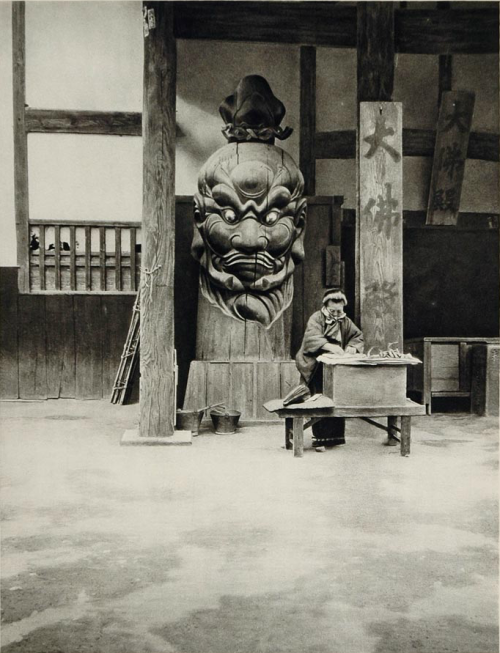
Yama (Sanskrit: यम) or Yamarāja (यमराज)
is the god of death, belonging to an early stratum of Vedic mythology.
In the Vedas, Yama is said to have been the first mortal who died. By
virtue of precedence, he became the ruler of the departed ...
.
.
.
I got out of bed
on two strong legs.
It might have been
otherwise. I ate
cereal, sweet
milk, ripe, flawless
peach. It might
have been otherwise.
I took the dog uphill
to the birch wood.
All morning I did
the work I love.
At noon I lay down
with my mate. It might
have been otherwise.
We ate dinner together
at a table with silver
candlesticks. It might
have been otherwise.
I slept in a bed
in a room with paintings
on the walls, and
planned another day
just like this day.
But one day, I know,
it will be otherwise.
–Jane Kenyon
.
.
On
average, about 700 Americans kill themselves each week — but in the
fine-weather weeks of May and June, the toll rises closer to 800,
sometimes higher. Every year, suicide peaks with the tulips and lilacs —
increasing roughly 15 percent over the annual average to create one of
psychiatry’s most consistent epidemiological patterns. It may seem
perverse that the period of spring and early summer, as the psychologist
Kay Redfield Jamison puts it in her splendid book “Night Falls Fast,” should contain “a capacity for self-murder that winter less often has.” Yet it does.
This
grim spring growth confounds conventional belief that suicides peak in
winter. It also confounds researchers — and fascinates them. As they
discover more angles into the biology of mood and behavior, they are
finding new clues about why suicides rise with the sun’s arc. They hope
solving this puzzle will help us better understand why people commit
suicide at all — and perhaps reduce the numbers year-round.
This
effort takes an extra urgency from what Dr. Adam Kaplin, a psychiatrist
at Johns Hopkins University, calls a “suicide epidemic” — a sharp
increase in both absolute and per-capita rates since the recession that
began in 2007, particularly among the middle-aged. More than 38,000 people committed suicide
in the United States in 2010 — a 16.5 percent jump from the 32,600
suicides five years before, and a new high. The stakes involved in
figuring out the dynamics of self-murder seem only to rise with time.
The
spring surge in suicides is actually the largest of a few oscillations
throughout the year. After dropping to an annual low in February
(October in the southern hemisphere), rates climb sharply through
spring; fall slowly in summer; show a slight rise, according to some
studies, in fall; and then begin a steep winter drop. The spring peak
generally runs 10 to 25 percent above the yearly average and 20 to 50
percent above the February low.
The spring increase was first
noticed in 19th-century Europe. Many studies, some examining data
hundreds of years back, have documented it since. But explaining it has
proved difficult, primarily because of suicide’s extreme complexity.
“There’s no one reason that people do it,” said Nadine Kaslow,
a research psychologist at Emory University. Rather, she says, people
usually commit suicide because personal, social-system and environmental
factors combine to push them to a new place of energized despair.
In this view, spring somehow adds weight to an already unbearable load. But how?
One
traditional candidate, favored by both Dr. Jamison and Dr. Kaslow, is
the “broken promise effect” — the sometimes crushing disappointment that
spring fails to bring the relief the sufferer has hoped for.
In addition, psychiatrists have long observed that for patients with bipolar disorder and depression, spring can create a manic agitation that amplifies the risk of suicide — agitation that has long shown itself in a rising rate of hospitalizations for suicide attempts and for manic or schizophrenic episodes in spring and summer.
Researchers
have long suspected that this may be tied to the springtime drop in the
sleep-friendly hormone melatonin, a reduction that energizes us for
spring’s longer days but may sometimes help generate dangerous
agitation. Yet that link, like many, remains elusive.
In the past
decade or so, some researchers have increasingly focused on another
candidate: an apparently intimate relationship between suicide and
inflammation.
Dr. Kaplin studies depression in patients with multiple sclerosis,
an autoimmune inflammatory disease. In M.S., he says, depression and
inflammation feed each other: Even after accounting for the
psychological effects of any serious illness, M.S. heightens depression
risk, and depression amplifies the inflammation central to the disease’s
central pathologies.
Driving this relationship, Dr. Kaplin
suspects, are immune-system chemical messengers called cytokines. Some
cytokines increase inflammation, while others curb it.
Inflammatory cytokines play crucial roles in fighting infection, but they can also cause problems. When people with hepatitis C
are given the cytokine interferon to help fight the infection, for
instance, up to 40 percent become depressed and one in 50 attempt
suicide. Other studies suggest that inflammatory cytokine activity
reduces levels of the neurotransmitter serotonin and halts the growth of
new brain cells — two hallmarks of depression.
If inflammation heightens the risk of depression, how might that lead to a spring surge in suicide?
Dr.
Kaplin and others point to several possibilities — “all speculative,”
he says, not findings to act on but clues to follow. In every case, the
suggested risk comes not from a direct effect but from an additional
sensitivity to inflammation that could be a final straw or irritant.
One
possibility is that many people enter spring sensitized to inflammation
by late-winter battles with seasonal infections like colds and flu.
A second possibility involves tree pollen. Dr. Teodor T. Postolache,
a psychiatrist at the University of Maryland, believes that large
amounts of it may cause cytokine-driven inflammatory responses. A study
he did links high spring tree pollen counts with high seasonal suicide
rates; another examined the brains of 34 suicide victims and found
gene-expression patterns consistent with cytokine-driven inflammation.
Yet
another possibility involves vitamin D. The low levels caused by lack
of sunlight in the winter are thought to lead to inflammation; one recent study tentatively suggested a link to suicide.
Dr. Kaplin thus wonders if people already at risk for suicide may
increase their risk if they enter spring with inflammatory systems
sensitized by vitamin D deficiencies.
“The answer to this puzzle is probably some form of ‘all of the above,’ ” he said.
Even
if these inflammatory factors prove out, they will be just some among
many — mood disorders, divorce, job loss, grief, trauma — that fertilize
spring’s darkest bloom. But the more factors researchers can identify,
the better we can understand not just the spring surge but the larger
mysteries of suicide.
Still, if researchers are ever to identify
the seasonal culprits, they may need to hurry. One of the most
intriguing findings in the seasonality of suicide is that this ancient
pattern appears to be fading — possibly because we all spend more time
indoors.
A study of Switzerland’s well-kept monthly suicide records
between 1880 and 2000, for instance, showed the spring/summer curve
growing flatter with each successive 30-year period. Like too many lives
lost as we struggle to comprehend suicide, this spring surge may slip
away before we can fully glean its unique offerings.
By DAVID DOBBS
David Dobbs is working on a book about the genetic and cultural roots of temperament and behavior. Follow @David_Dobbs on Twitter.