
.
source unknown, sadly
.

I could not die — with You —
For One must wait
To shut the Other’s Gaze down —
You — could not —
—Emily Dickinson

Love—is anterior to Life—Posterior—to Death—
Initial of Creation, and
The Exponent of Earth——Emily Dickinson
I imagine the dead waking, dazed, into a shadowless light in which they know themselves altogether for the first time. It is a light that is merciless until they can accept its mercy; by it they are at once condemned and redeemed. It is Hell until it is Heaven.
Seeing themselves in that light, if they are willing, they see how far they have failed the only justice of loving one another; it punishes them by their own judgment. And yet, in suffering that light's awful clarity, in seeing themselves in it, they see its forgiveness and its beauty, and are consoled.
In it they are loved completely, even as they have been, and so are changed into what they could not have been but what, if they could have imagined it, they would have wished to be.
—Wendell Berry
Who has not found the heaven belowWill fail of it above.
God’s residence is next to mine,
His furniture is love.
—Emily Dickinson

A Species stands beyond -Invisible, as Music -But positive, as Sound -It beckons, and it baffles -Philosophy, don't know -And through a Riddle, at the last -Sagacity, must go -To guess it, puzzles scholars -To gain it, Men have borneContempt of GenerationsAnd Crucifixion, shown -Faith slips - and laughs, and rallies -Blushes, if any see -Plucks at a twig of Evidence -And asks a Vane, the way -Much Gesture, from the Pulpit -Strong Hallelujahs roll -Narcotics cannot still the ToothThat nibbles at the soul -
–Emily Dickinson
this world is not a conclusion
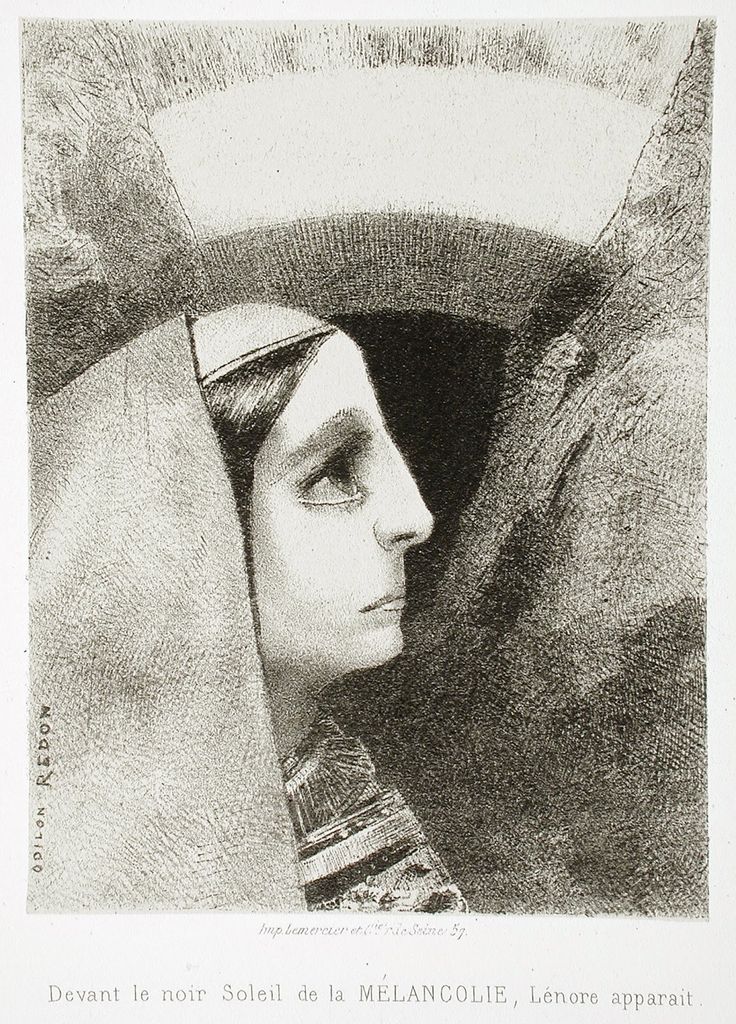
Death is a Dialogue between
The Spirit and the Dust.
"Dissolve" says Death—The Spirit "Sir
I have another Trust"—
Death doubts it—Argues from the Ground—
The Spirit turns away
Just laying off for evidence
An Overcoat of Clay.
–Emily Dickinson
976

Reflections on silence and eternity from the poet laureate of death.
by Maria Popova
Emily Dickinson (December 10, 1830–May 15, 1886) was about to turn fifty-two when her mother, after whom she was named, died. A stroke had left her paralyzed and almost entirely disabled eight years earlier. Despite her lifelong infirm health, her disinterest in the life of the mind, and the surges of unhappiness in the Dickinson home, Emily Norcross Dickinson had been attentive and affectionate to her daughter, igniting the poet’s little-known but ardent passion for botany and prompting her to write that “home is a holy thing.”
Although a contemplation of mortality haunts nearly all of Dickinson’s 1775 surviving poems in varying degrees of directness, her mother’s death forced a confrontation with mortality of a wholly different order — loss as an acute immediacy rather than a symbolic and speculative abstraction.
In a letter to her cousins penned shortly after her mother’s death in November of 1882 and found in The Letters of Emily Dickinson (public library), the poet writes:
Mother’s dying almost stunned my spirit… She slipped from our fingers like a flake gathered by the wind, and is now part of the drift called “the infinite.”
We don’t know where she is, though so many tell us.
Even as a child, Emily had come to doubt the immortality so resolutely promised by the Calvinist dogma of her elders. “Sermons on unbelief ever did attract me,” she wrote in her twenties to Susan Gilbert — her first great love and lifelong closest friend. Dickinson went on to reject the prescriptive traditional religion of her era, never joined a church, and adopted a view of spirituality kindred to astronomer Maria Mitchell’s. It is with this mindset that she adds in the letter to her cousins:
I believe we shall in some manner be cherished by our Maker — that the One who gave us this remarkable earth has the power still farther to surprise that which He has caused. Beyond that all is silence…
Writing less than four years before her own untimely death, she ends the letter with these words:
I cannot tell how Eternity seems. It sweeps around me like a sea… Thank you for remembering me. Remembrance — mighty word.
In another letter from the following spring, penned after receiving news of a friend’s death, Dickinson stills her swirling sorrow the best way she knew how — in a poem:
Each that we lose takes part of us;
A crescent still abides,
Which like the moon, some turbid night,
Is summoned by the tides.
She adds a sobering reflection on the shock each of us experiences the first time we lose a loved one:
Till the first friend dies, we think ecstasy impersonal, but then discover that he was the cup from which we drank it, itself as yet unknown.

Because I could not stop for Death,
He kindly stopped for me;
The carriage held but just ourselves
And Immortality.
We slowly drove, he knew no haste,
And I had put away
My labour, and my leisure too,
For his civility.
We passed the school where children played,
Their lessons scarcely done;
We passed the fields of gazing grain,
We passed the setting sun.
We paused before a house that seemed
A swelling of the ground;
The roof was scarcely visible,
The cornice but a mound.
Since then ‘tis centuries; but each
Feels shorter than the day
I first surmised the horses’ heads
Were toward eternity.
–Emily Dickinson


Who has not found the heaven belowWill fail of it above.
God’s residence is next to mine,
His furniture is love.
–Emily Dickinson

I heard a Fly buzz – when I died –
The Stillness in the Room
Was like the Stillness in the Air –
Between the heaves of storm –
The Eyes around – had wrung them dry –And Breaths were gathering firmFor that last onset – when the KingBe witnessed – in the room –I willed my Keepsakes – Signed awayWhat portion of me beAssignable – and then it wasThere interposed a Fly –With Blue-uncertain stumbling Buzz –Between the light – and me –And then the Windows failed – and thenI could not see to see –
–Emily Dickinson
