Showing posts with label Rainer Maria Rilke. Show all posts

Friday, December 17, 2021

in praise of mortality


.


Praise the world to the angel: leave the unsayable aside.
Your exalted feelings do not move him.
In the universe, where he feels feelings, you are a beginner.
Therefore show him what is ordinary, what has been
shaped from generation to generation, shaped by hand and eye.
Tell him of things. He will stand still in astonishment,
the way you stood by the ropemaker in Rome
or beside the potter on the Nile.
Show him how happy a thing can be, how innocent and ours,
how even a lament takes pure form,
serves as a thing, dies as a thing,
while the violin, blessing it, fades.

And the things, even as they pass,understand that we praise them. Transient, they are trusting usto save them - us, the most transient of all.As if they wanted in our invisible heartsto be transformedinto - oh, endlessly - into us.

Earth, isn't this what you want? To arise in us, invisible?
Is it not your dream, to enter us so wholly
there's nothing left outside us to see?
What, if not transformation,
is your deepest purpose? Earth, my love,
I want that too. Believe me,
no more of your springtimes are needed
to win me over - even one flower
is more than enough. Before I was named
I belonged to you. I seek no other law
but yours, and know I can trust
the death you will bring.


—Rainer Maria Rilke
Ninth Duino Elegy
Anita Barrows and Joanna Macy version


.


Friday, December 3, 2021

the swan


.


This laboring of ours with all that remains undone,
as if still bound to it,
is like the lumbering gait of the swan.

And then our dying — releasing ourselves
from the very ground on which we stood —
is like the way he hesitantly lowers himself

into the water. It gently receives him,
and, gladly yielding, flows back beneath him,
as wave follows wave,
while he, now wholly serene and sure,
with regal composure,
allows himself to glide.


—Rainer Maria Rilke


.


Tuesday, October 19, 2021

in the kingdom of transformation


.


Losing too is still ours; 
and even forgetting
 still has a shape 
in the kingdom of transformation.

When something's let go of, it circles; 
and though we are
 rarely the center of the circle, 
it draws around us its unbroken, 
marvelous
 curve.


—Rainer Maria Rilke
(For Hans Carossa)


.


Thursday, October 14, 2021

In Praise of Mortality


.


We set the pace.
But this press of time --
take it as a little thing
next to what endures.

All this hurrying
soon will be over.
Only when we tarry
do we touch the holy.

Young ones, don't waste your courage
racing so fast,
flying so high.

See how all things are at rest --
darkness and morning light,
blossom and book.


—Rainer Maria Rilke
Sonnets to Orpheus, Part One, XXII 


.


Sunday, October 3, 2021

Excerpts from the The Ninth Elegy


 .


Why, when this short span of being could be spent
like the laurel, a little darker than all the other green, 
the edge of each leaf fluted with small waves 
(like the wind’s smile) — why, then, do we have to be 
human and, avoiding fate, long for fate?
Oh, not because of happiness,
that quick profit of impending loss really exists.
Not out of curiosity, not just to exercise the heart
– that could be in the laurel, too…

But because being here means so much, and because all
that’s here, vanishing so quickly seems to need us
and strangely concerns us. Us, to the first to vanish.

Once each, only once. Once and no more. And us too,
once, even if only once, to have been on earth just once 
— that’s irrevocable.

And so we keep on going and try to realize it,
try to hold it in our simple hands, in our overcrowded eyes, 
and in our speechless heart.

Try to become it. To give it to whom? We’d rather
keep all of it forever… Ah, but what can we take across
into that other realm? 

Not the power to see what we’ve learned so slowly here, 
and nothing that’s happened here.
Nothing. And so, the pain; above all, the hard work of living; 
the long experience of love – those purely unspeakable things. 

But later, under the stars, what then? 
That’s better left unsaid.

For the wanderer doesn’t bring a handful of that unutterable 
earth from the mountainside down to the valley, but only some 
word he’s earned, a pure word, the yellow and blue gentian. 

Maybe we’re here only to say: house, bridge, well, gate, jug, 
olive tree, window – at most, pillar, tower… but to say them, 
remember, oh, to say them in a way that the things themselves
never dreamed of existing so intensely. 

When this silent earth urges lovers on, isn’t it her secret 
reason to make everything shudder with ecstasy in them?

Doorsill: how much it means to a pair of lovers
to wear down the sill of their own door a little more, 
them too, after so many before them, and before all 
those to come…gently.

This is the time for what can be said. Here is its country. 
Speak and testify. The things we can live with are falling 
away more than ever, replaced by an act without symbol.

Our heart survives between hammers, just as the tongue 
between the teeth is still able to praise.

Look, I’m alive. On what? Neither childhood nor the future 
grows less…
More being than I’ll ever need springs up in my heart.


—Rainer Maria Rilke


.


Friday, August 20, 2021

in praise of mortality


.


Want the change.
Be inspired by the flame
where everything shines as it disappears.
The artist, when sketching, loves nothing so much
as the curve of the body as it turns away.

What locks itself in sameness has congealed.
Is it safer to be gray and numb?
What turns hard becomes rigid
and is easily shattered.

Pour yourself out like a fountain.
Flow into the knowledge that what you are seeking
finishes often at the start, and, with ending, begins.
Every happiness is the child of a separation
it did not think it could survive.

And Daphne, becoming a laurel,
dares you to become the wind.


—Rainer Maria Rilke
Sonnets to Orpheus, Part Two, XII
Anita Barrows/Joanna Macy translation


.


Friday, August 13, 2021

forever taking leave


.


With all its eyes the natural world looks out
into the Open. Only our eyes are turned
backward, and surround plant, animal, child
like traps, as they emerge into their freedom.

We know what is really out there only from 
the animal's gaze; for we take the very young
child and force it around, so that it sees
objects - not the Open, which is so
deep in animals' faces. Free from death.
We, only, can see death; the free animal
has its decline in back of it, forever,
and God in front, and when it moves, it moves
already in eternity, like a fountain.

Never, not for a single day, do we have
before us that pure space into which flowers
endlessly open. Always there is World
and never Nowhere without the No: that pure
unseparated element which one breathes
without desire and endlessly knows. A child
may wander there for hours, through the timeless
stillness, may get lost in it and be 
shaken back. Or someone dies and is it.
For, nearing death, one doesn't see death; but stares
beyond, perhaps with an animal's vast gaze.
 

Lovers, if the beloved were not there
blocking the view, are close to it, and marvel...
As if by some mistake, it opens for them
behind each other... But neither can move past
the other, and it changes back to World.
Forever turned toward objects, we see in them
the mere reflection of the realm of freedom,
which we have dimmed. Or when some animal
mutely, serenely, looks us through and through.
That is what fate means: to be opposite,
to be opposite and nothing else, forever.

If the animal moving toward us so securely
in a different direction had our kind of 
consciousness -, it would wrench us around and drag us
along its path. But it feels its life as boundless,
unfathomable, and without regard
to its own condition: pure, like its outward gaze.
And where we see the future, it sees all time
and itself within all time, forever healed.

Yet in the alert, warm animal there lies
the pain and burden of an enormous sadness.
For it too feels the presence of what often 
overwhelms us: a memory, as if 
the element we keep pressing toward was once
more intimate, more true, and our communion
infinitely tender. Here all is distance;

there it was breath. After that first home,
the second seems ambiguous and drafty.

Oh bliss of the tiny creature which remains
forever inside the womb that was its shelter;
joy of the gnat which, still within, leaps up
even at its marriage: for everything is womb.
And look at the half-assurance of the bird,
which knows both inner and outer, from its source,
as if it were the soul of an Etruscan,
flown out of a dead man received inside a space,
but with his reclining image as the lid.
And how bewildered is any womb-born creature
that has to fly. As if terrified and fleeing
from itself, it zigzags through the air, the way 
a crack runs through a teacup. So the bat
quivers across the porcelain of evening.

And we: spectators, always, everywhere,
turned toward the world of objects, never outward.
It fills us. We arrange it. It breaks down.
We rearrange it, then break down ourselves.
Who has twisted us around like this, so that 
no matter what we do, we are in the posture
of someone going away? Just as, upon
the farthest hill, which shows him his whole valley
one last time, he turns, stops, lingers -,
so we live here, forever taking leave.


—Rainer Maria Rilke

from Duino Elegies, the eighth elegy


.


Monday, May 3, 2021

Death has nothing to do with going away. —Rumi


.


... we are only the rind and the leaf. 
 
The great death, that each of us carries inside, is the fruit. 

Everything enfolds it. 


—Rainer Maria Rilke


.


Monday, April 19, 2021

in praise of mortality, excerpt


.


You who let yourselves feel: enter the breathing
that is more than your own.
Let it brush your cheeks
as it divides and rejoins beside you.

Blessed ones, whole ones,
you where the heart begins:
You are the bow that shoots the arrows
and you are the target.

Fear not the pain. Let its weight fall back
into the earth;
for heavy are the mountains, heavy the seas.

The trees you planted in childhood have grown
too heavy. You cannot bring them along.
Give yourselves to the air, to what you cannot hold.


—Rainer Maria Rilke 
Anita Barrows/Joanna Macy version


.


Friday, December 15, 2017

again and again


.


Again and again, however we know the landscape of love
and the little churchyard there, with its sorrowing names,
and the frighteningly silent abyss into which the others
fall: again and again the two of us walk out together
under the ancient trees, lie down again and again
among the flowers, face to face with the sky.

–Rainer Maria Rilke


.


Thursday, October 5, 2017

To Hölderlin


.


We are not permitted to linger, even with what is most
intimate. From images that are full, the spirit
plunges on to others that suddenly must be filled;
there are no lakes till eternity. Here,
falling is best. To fall from the mastered emotion 
into the guessed-at, and onward.

To you, O majestic poet, to you the compelling image,
O caster of spells, was a life, entire; when you uttered it
a line snapped shut like fate, there was a death
even in the mildest, and you walked straight into it; but
the god who preceded you led you out and beyond it.

O wandering spirit, most wandering of all! How snugly
the others live in their heated poems and stay,
content, in their narrow smiles. Taking part. Only you 
move like the moon. And underneath brightens and darkens
the nocturnal landscape, the holy, the terrified landscape,
which you feel in departures. No one
gave it away more sublimely, gave it back
more fully to the universe, without any need to hold on.
Thus for years that you no longer counted, holy, you played
with infinite joy, as though it were not inside you,
but lay, belonging to no one, all around
on the gentle lawns of the earth, where the godlike children had left it.
Ah, what the greatest have longed for: you built it, free of desire,
stone upon stone, till it stood.  And when it collapsed,
even then you weren't bewildered.

Why, after such an eternal life, do we still
mistrust the earthly?  Instead of patiently learning from transience
the emotions for what future
slopes of the heart, in pure space?


–Rainer Maria Rilke
from Uncollected Poems
Stephen Mitchell translation


.


Sunday, October 1, 2017

interior portrait


.


You don't survive in me
because of memories;
nor are you mine because
of a lovely longing's strength.

What does make you present
is the ardent detour
that a slow tenderness
traces in my blood.

I do not need
to see you appear;
being born sufficed for me
to lose you a little less.

Rainer Maria Rilke


.


Saturday, September 2, 2017

my life is not this steeply sloping hour


.


My life is not this steeply sloping hour,
in which you see me hurrying.

Much stands behind me: I stand before it like a tree:
I am only one of many mouths
and at that, the one that will be still the soonest.

I am the rest between two notes,
which are somehow always in discord
because Death's note wants to climb over—
but the dark interval, reconciled,
They stay here trembling.
And the song goes on, beautiful.

–Rainer Maria Rilke


.


Thursday, January 12, 2017

isn't this what you want?


.


Earth, isn't this what you want? To arise in us, invisible?
Is it not your dream, to enter us so wholly
there's nothing left outside us to see?
What, if not transformation,
is your deepest purpose? Earth, my love,
I want that too. Believe me,
no more of your springtimes are needed
to win me over - even one flower
is more than enough. Before I was named
I belonged to you. I seek no other law
but yours, and know I can trust
the death you will bring.


–Rainer Maria Rilke
In Praise Of Mortality, excerpt


.
davidbeattie
.


Wednesday, July 13, 2016

autumn


.


The leaves are falling, falling as if from far up,
as if orchards were dying high in space.
Each leaf falls as if it were motioning “no.”

And tonight the heavy earth is falling
away from all other stars in the loneliness.

We’re all falling. This hand here is falling.
And look at the other one. It’s in them all.

And yet there is Someone, whose hands
are infinitely calm, holding up all this falling.


Rainer Maria Rilke


.


Wednesday, November 18, 2015

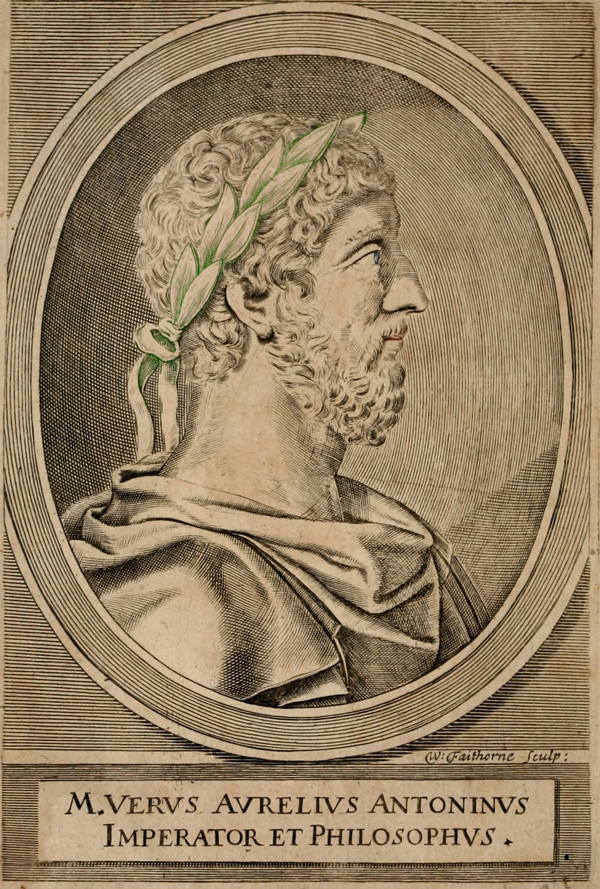
Marcus Aurelius on Mortality and the Key to Living Fully


“The only thing that isn’t worthless: to live this life out truthfully and rightly.
And be patient with those who don’t.”

“Death is our friend,” Rilke wrote in an exquisite 1923 letter, “precisely because it brings us into absolute and passionate presence with all that is here, that is natural, that is love.” And yet one of the defining features of the human condition is that we long for immortality despite inhabiting a universe governed by impermanence.
Eighteen centuries before Rilke, the great Roman emperor and Stoic philosopher Marcus Aurelius addressed this abiding human paradox of life and death with astonishing lucidity in his Meditations (public library | free ebook) — his indispensable proto-blog, which also gave us the philosophic emperor’s enduring wisdom on how to begin each day for maximum sanity and what his father taught him about honor and humility.
Aurelius, translated here by Gregory Hays, considers how befriending this eternal interplay of life and death can inform and ennoble our existential priorities:
Just that you do the right thing. The rest doesn’t matter.
Cold or warm.
Tired or well-rested.
Despised or honored.
Dying … or busy with other assignments.

Because dying, too, is one of our assignments in life.
There as well: “to do what needs doing.”
In another meditation, he revisits the question of our inescapable impermanence:
Some things are rushing into existence, others out of it. Some of what now exists is already gone. Change and flux constantly remake the world, just as the incessant progression of time remakes eternity.
We find ourselves in a river. Which of the things around us should we value when none of them can offer a firm foothold?
Like an attachment to a sparrow: we glimpse it and it’s gone.
And life itself: like the decoction of blood, the drawing in of air. We expel the power of breathing we drew in at birth (just yesterday or the day before), breathing it out like the air we exhale at each moment.
With breath-stopping simplicity, Aurelius crystallizes the inevitable and indiscriminate nature of this inhale-exhale cycle that is life:
Alexander the Great and his mule driver both died and the same thing happened to both. They were absorbed alike into the life force of the world, or dissolved alike into atoms.
But rather than being dispirited by this awareness, he suggests, we can find it in an enlivening force of moral solidity in the face of our ephemeral existence:
Keep this constantly in mind: that all sorts of people have died — all professions, all nationalities. Follow the thought all the way down to Philistion, Phoebus, and Origanion. Now extend it to other species.
We have to go there too, where all of them have already gone:
… the eloquent and the wise — Heraclitus, Pythagoras, Socrates …
… the heroes of old, the soldiers and kings who followed them …
… the smart, the generous, the hardworking, the cunning, the selfish …
… and even [those] who laughed at the whole brief, fragile business.

All underground for a long time now.
And what harm does it do them? Or the others either — the ones whose names we don’t even know?
From this he extracts the ultimate moral:
The only thing that isn’t worthless: to live this life out truthfully and rightly. And be patient with those who don’t.
Meditations is a requisite read in its entirety — the kind that stays with you for a lifetime and rewards anew with each rereading. Complement it with Seneca, a fellow Stoic, on how to fill the shortness of life with greater width of aliveness and Bertrand Russell on the paradox of immortality.


Tuesday, August 18, 2015

to Holderlin


.


We are not permitted to linger, even with what is most
intimate. From images that are full, the spirit
plunges on to others that suddenly must be filled;
there are no lakes till eternity. Here,
falling is best. To fall from the mastered emotion
into the guessed-at, and onward.

To you, O majestic poet, to you the compelling image,
O caster of spells, was a life, entire; when you uttered it
a line snapped shut like fate, there was a death
even in the mildest, and you walked straight into it; but
the god who preceded you led you out and beyond it.

O wandering spirit, most wandering of all! How snugly
the others live in their heated poems and stay,
content, in their narrow smiles. Taking part. Only you
move like the moon. And underneath brightens and darkens
the nocturnal landscape, the holy, the terrified landscape,
which you feel in departures. No one
gave it away more sublimely, gave it back
more fully to the universe, without any need to hold on.
 

Thus for years that you no longer counted, holy, you played
with infinite joy, as though it were not inside you,
but lay, belonging to no one, all around
on the gentle lawns of the earth, where the godlike children had left it.
Ah, what the greatest have longed for: you built it, free of desire,
stone upon stone, till it stood. And when it collapsed,
even then you weren't bewildered.

Why, after such an eternal life, do we still
mistrust the earthly? Instead of patiently learning from transience
the emotions for what future
slopes of the heart, in pure space?


–Rainer Maria Rilke
Stephen Mitchell translation


.


Thursday, July 16, 2015

the rest between two notes


.


My life is not this steeply sloping hour,
in which you see me hurrying.

Much stands behind me: I stand before it like a tree:
I am only one of many mouths
and at that, the one that will be still the soonest.

I am the rest between two notes,
which are somehow always in discord
because Death's note wants to climb over—
but the dark interval, reconciled,
They stay here trembling.
And the song goes on, beautiful.

–Rainer Maria Rilke


.
Mark Bridger
.


Wednesday, June 10, 2015

to be opposite


.


With all its eyes the natural world looks out into the Open. Only our eyes are turned backward, surrounding plant, animal, child like traps, as they emerge into their freedom.
We know what is really out there only from the animal's gaze; for we take the very young child and force it around, so that it sees objects - not the Open, which is so deep in animals' faces. Free from death.
We, only, can see death; the free animal has its decline in back of it, forever, and God in front, and when it moves, it moves already in eternity, like a fountain.
 
Never, not for a single day, do we have before us that pure space into which flowers endlessly open.  Always there is World and never Nowhere without the No: that pure unseparated element which one breathes without desire and endlessly knows.  
A child may wander there for hours, through the timeless stillness, may get lost in it and be shaken back. Or someone dies and is it.
For, nearing death, one doesn't see death; but stares beyond, perhaps with an animal's vast gaze. Lovers, if the beloved were not there blocking the view, are close to it, and marvel...
As if by some mistake, it opens for them behind each other... But neither can move past the other, and it changes back to World.
Forever turned toward objects, we see in them the mere reflection of the realm of freedom, which we have dimmed. Or when some animal mutely, serenely, looks us through and through.
That is what fate means: to be opposite, to be opposite and nothing else, forever.
 
 
–Rainer Maria Rilke


.


Wednesday, February 18, 2015

the true form of life


.


Death is the side of life that is turned away from us
and not illuminated. 


… The true form of life extends through both regions, the blood of the mightiest circulation pulses through both: there is neither a this-world nor an other-world, but only the great unity, in which the ‘angels,’ those beings who surpass us, are at home.


—Rainer Maria Rilke
Stephen Mitchell translation
from a letter to Witold Hulewicz dated 13 November 1925


.