Showing posts with label Maria Popova. Show all posts

Monday, April 11, 2022

understanding infinity (kinship)


.


[...] At that moment, there were 3,​147,​740,​103,​497,​276,​498,​750,​208,​327 atoms in her body. Of her total mass, 63.7 percent was oxygen, 21.0 percent carbon, 10.1 percent hydrogen, 2.6 percent nitrogen, 1.4 percent calcium, 1.1 percent phosphorous, plus a smattering of the ninety-odd other chemical elements created in stars.

In the cremation, her water evaporated. Her carbon and nitrogen combined with oxygen to make gaseous carbon dioxide and nitrogen dioxide, which floated skyward and mingled with the air. Most of her calcium and phosphorous baked into a reddish brown residue and scattered in soil and in wind.

Released from their temporary confinement, her atoms slowly spread out and diffused through the atmosphere. In sixty days’ time, they could be found in every handful of air on the planet. In one hundred days, some of her atoms, the vaporous water, had condensed into liquid and returned to the surface as rain, to be drunk and ingested by animals and plants. Some of her atoms were absorbed by light-utilizing organisms and transformed into tissues and tubules and leaves. Some were breathed in by oxygen creatures, incorporated into organs and bone.

Pregnant women ate animals and plants made of her atoms. A year later, babies contained some of her atoms… Several years after her death, millions of children contained some of her atoms. And their children would contain some of her atoms as well. Their minds contained part of her mind.

Will these millions of children, for generations upon future generations, know that some of their atoms cycled through this woman? It is not likely. Will they feel what she felt in her life, will their memories have flickering strokes of her memories, will they recall that moment long ago when she stood by the window, guilt ridden and confused, and watched as the tadr bird circled the cistern? No, it is not possible. Will they have some faint sense of her glimpse of the Void? No, it is not possible. It is not possible. But I will let them have their own brief glimpse of the Void, just at the moment they pass from living to dead, from animate to inanimate, from consciousness to that which has no consciousness. For a moment, they will understand infinity.

And the individual atoms, cycled through her body and then cycled through wind and water and soil, cycled through generations and generations of living creatures and minds, will repeat and connect and make a whole out of parts. Although without memory, they make a memory. Although impermanent, they make a permanence. Although scattered, they make a totality.


—Alan Lightman
Mr. g: A Novel About the Creation, excerpt


.    .    .


Very slowly burning, the big forest tree
stands in the slight hollow of the snow
melted around it by the mild, long
heat of its being and its will to be
root, trunk, branch, leaf, and know
earth dark, sun light, wind touch, bird song.

Rootless and restless and warmblooded, we
blaze in the flare that blinds us to that slow,
tall, fraternal fire of life as strong
now as in the seedling two centuries ago.


—Ursula K. Le Guin
Kinship


.

two of the many gifts from Maria Popova at
The Marginalian (formerly Brainpickings)
do read this one

Pillars of Creation, Eagle Nebula, Messier 16. 
Infrared photograph. NASA / Hubble Space Telescope

.


Thursday, March 22, 2018

the good death


.


“To lament that we shall not be alive a hundred years hence, is the same folly as to be sorry we were not alive a hundred years ago,” Montaigne wrote in his timeless meditation on death and the art of living.
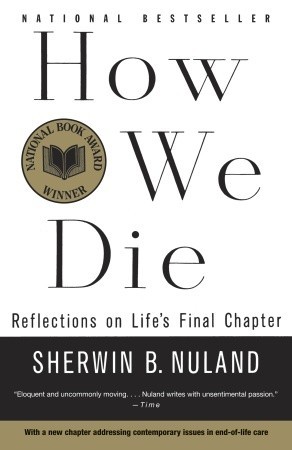
And yet in the half millennium since his day, we’ve made paltry progress on coming to such nonchalant terms with the reality of death. We are still profoundly unprepared when it strikes our loved ones and paralyzed by the prospect of our own demise. Our discomfort with “the idea of a permanent unconsciousness in which there is neither void nor vacuum — in which there is simply nothing” is what surgeon, bioethicist, essayist, and Yale professor Sherwin Nuland (1930–2014) explores with astonishing wisdom and sensitivity in his soul-stretching 1993 book How We Die: Reflections of Life’s Final Chapter (public library) — a dimensional treatise on death and an effort to “demythologize the process of dying,” fusing philosophical reflections on its most universal aspects with the specialized complexities occasioned by the six most common disease categories implicated in modern death.

But Nuland’s hard-earned professional expertise, his life’s work in medicine and understanding the human condition, is merely the byproduct of his unforgiving personal brush with death — Nuland lost his mother to colon cancer a week after his eleventh birthday, a tragedy that shaped his life. “All that I have become and much that I have not become, I trace directly or indirectly to her death,” he reflects. This book itself was written less than a year after Nuland lost his brother to the same disease that had claimed their mother’s life.
Nuland writes:

Everyone wants to know the details of dying, though few are willing to say so. Whether to anticipate the events of our own final illness or better to comprehend what is happening to a mortally stricken loved one… we are lured by thoughts of life’s ending… To most people, death remains a hidden secret, as eroticized at it is feared. We are irresistibly attracted by the very anxieties we find most terrifying; we are drawn to them by a primitive excitement that arises from flirtation with danger. Moths and flames, mankind and death — there is little difference.
[...]
As with every other looming terror and looming temptation, we seek ways to deny the power of death and the icy hold in which it grips human thought.
Throughout history, he observes, our strategies for ameliorating that icy hold have varied, from mythology to humor to religion, but the past few decades have given us a wholly new phenomenon, one he dubs “modern dying” — a sort of packaged experience that takes place at the hospital, where we try to artificially enact the ancient ideal of ars moriendi, or the art of dying. Reflecting on his extensive work with dying patients, Nuland considers the impossibility of that ideal in a modern context:

The good death has increasingly become a myth. Actually, it has always been for the most part a myth, but never nearly as much as today. The chief ingredient of the myth is the longed-for ideal of “death with dignity.”
[...]
The belief in the probability of death with dignity is our, and society’s, attempt to deal with the reality of what is all too frequently a series of destructive events that involve by their very nature the disintegration of the dying person’s humanity. I have not often seen much dignity in the process by which we die… Only by a frank discussion of the very details of dying can we best deal with those aspects that frighten us the most. It is by knowing the truth and being prepared for it that we rid ourselves of that fear of the terra incognita of death that leads to self-deception and disillusions.
And yet despite lamenting the illusory mythology of dying with dignity, Nuland’s perspective is ultimately an optimistic one, reframing the source of dignity in death rather than denying it altogether, and doing so in wonderfully poetic terms:

The greatest dignity to be found in death is the dignity of the life that preceded it. This is a form of hope that we can all achieve, and it is the most abiding of all. Hope resides in the meaning of what our lives have been.
But our greatest act of hope in dying, Nuland argues, is the dissolution of our illusion of separateness. He writes:

The real event taking place at the end of our life is our death, not the attempts to prevent it. We have somehow been so taken up with the wonders of modern science that our society puts the emphasis in the wrong place. It is the dying that is the important thing — the central player in the drama is the dying man: the dashing leader of that bustling squad of his would-be rescuers is only a spectator, and a groundling at that.
Reflecting on the commonly documented medical fact that the dying can often survive for weeks beyond their prognosis, sustained merely by the hope to live until a specific moment of significance — a daughter’s wedding, a grandchild’s graduation — Nuland calls to mind Rilke’s famous lines of verse (“Oh Lord, give each of us his own death / The dying, that issues forth out of the life / In which he had love, meaning and despair”) and considers the true source of hope:

For dying patients, the hope of cure will always be shown to be ultimately false, and even the hope of relief too often turns to ashes. When my time comes, I will seek hope in the knowledge that insofar as possible I will not be allowed to suffer or be subjected to needless attempts to maintain life; I will seek it in the certainty that I will not be abandoned to die alone; I am seeking it now, in the way I try to live my life, so that those who value what I am will have profited by my time on earth and be left with comforting recollections of what we have meant to one another… Whatever form it may take, each of us must find hope in his or her own way.
Nuland turns to the heaviest burden in dying, the feeling of regret over “conflicts unresolved, breached relationships not healed, potential unfulfilled, promises not kept, and years that will never be lived.” But even in this despairing proposition, he finds an unlikely and rather beautiful source of hope. Subverting Viktor Frankl’s famous formulation of the oft-repeated idea that we should live each day as if it were our last — “Live as if you were living already for the second time and as if you had acted the first time as wrongly as you are about to act now!” Frankl wrote in his spectacular memoir about the search for meaning — Nuland finds consolation in a heartening mirror-image interpretation:

Perhaps the mere existence of things undone should be a sort of satisfaction in itself, though the idea would appear to be paradoxical. Only one who is long since dead while still seemingly alive does not have many “promises to keep, and miles to go before I sleep,” and that state of inertness is not to be desired. To the wise advice that we live every day as though it will be our last, we do well to add the admonition to live every day as though we will be on this earth forever.
He returns to the hard ideal of ars moriendi, now enveloped in this newfound softness:

Since human beings first began to write, they have recorded their wish for an idealized ending some call the “good death,” as if any of us can ever be sure of it or have any reason to expect it. There are pitfalls of decision-making to be sidestepped and varieties of hope to seek, but beyond that we must forgive ourselves when we cannot achieve some preconceived image of dying right.
But perhaps Nuland’s most salient point has to do with the necessity of death as a force of nature’s forward momentum — an idea partway between evolutionary theory and the Japanese concept of wabi-sabi, with a touch of Alan Watts. He writes:

We die so that the world may continue to live. We have been given the miracle of life because trillions upon trillions of living things have prepared the way for us and then have died — in a sense, for us. We die, in turn, so that others may live. The tragedy of a single individual becomes, in the balance of natural things, the triumph of ongoing life.
In that sense, the dignity of death is indeed the dignity of life, and our only responsibility in dying well is having lived well:

The dignity that we seek in dying must be found in the dignity with which we have lived our lives. Ars moriendi as ars vivendi: The art of dying is the art of living. The honesty and grace of the years of life that are ending is the real measure of how we die. It is not in the last weeks or days that we compose the message that will be remembered, but in all the decades that preceded them. Who has lived in dignity, dies in dignity.


Tuesday, October 24, 2017

love letter


 .


October, 1946

"D'Arline

I adore you, sweetheart.

I know how much you like to hear that — but I don’t only write it because you like it — I write it because it makes me warm all over inside to write it to you.

It is such a terribly long time since I last wrote to you — almost two years but I know you’ll excuse me because you understand how I am, stubborn and realistic; and I thought there was no sense to writing.

But now I know my darling wife that it is right to do what I have delayed in doing, and that I have done so much in the past. I want to tell you I love you. I want to love you. I always will love you.

I find it hard to understand in my mind what it means to love you after you are dead — but I still want to comfort and take care of you — and I want you to love me and care for me. I want to have problems to discuss with you — I want to do little projects with you. I never thought until just now that we can do that. What should we do. We started to learn to make clothes together — or learn Chinese — or getting a movie projector. Can’t I do something now? No. I am alone without you and you were the “idea-woman” and general instigator of all our wild adventures.

When you were sick you worried because you could not give me something that you wanted to and thought I needed. You needn’t have worried. Just as I told you then there was no real need because I loved you in so many ways so much. And now it is clearly even more true — you can give me nothing now yet I love you so that you stand in my way of loving anyone else — but I want you to stand there. You, dead, are so much better than anyone else alive.

I know you will assure me that I am foolish and that you want me to have full happiness and don’t want to be in my way. I’ll bet you are surprised that I don’t even have a girlfriend (except you, sweetheart) after two years. But you can’t help it, darling, nor can I — I don’t understand it, for I have met many girls and very nice ones and I don’t want to remain alone — but in two or three meetings they all seem ashes. You only are left to me. You are real.

My darling wife, I do adore you.

I love my wife. My wife is dead.

Rich.


PS Please excuse my not mailing this — but I don’t know your new address."


.
Richard Feynman, to his wife Arline,
488 days after her death

more at
brainpickings
 .


Tuesday, August 1, 2017

The Drift Called the Infinite: Emily Dickinson on Making Sense of Loss


.


Reflections on silence and eternity from the poet laureate of death.
by Maria Popova


Emily Dickinson (December 10, 1830–May 15, 1886) was about to turn fifty-two when her mother, after whom she was named, died. A stroke had left her paralyzed and almost entirely disabled eight years earlier. Despite her lifelong infirm health, her disinterest in the life of the mind, and the surges of unhappiness in the Dickinson home, Emily Norcross Dickinson had been attentive and affectionate to her daughter, igniting the poet’s little-known but ardent passion for botany and prompting her to write that “home is a holy thing.”


Although a contemplation of mortality haunts nearly all of Dickinson’s 1775 surviving poems in varying degrees of directness, her mother’s death forced a confrontation with mortality of a wholly different order — loss as an acute immediacy rather than a symbolic and speculative abstraction.

In a letter to her cousins penned shortly after her mother’s death in November of 1882 and found in The Letters of Emily Dickinson (public library), the poet writes:


Mother’s dying almost stunned my spirit… She slipped from our fingers like a flake gathered by the wind, and is now part of the drift called “the infinite.”

We don’t know where she is, though so many tell us.


Even as a child, Emily had come to doubt the immortality so resolutely promised by the Calvinist dogma of her elders. “Sermons on unbelief ever did attract me,” she wrote in her twenties to Susan Gilbert — her first great love and lifelong closest friend. Dickinson went on to reject the prescriptive traditional religion of her era, never joined a church, and adopted a view of spirituality kindred to astronomer Maria Mitchell’s. It is with this mindset that she adds in the letter to her cousins:


I believe we shall in some manner be cherished by our Maker — that the One who gave us this remarkable earth has the power still farther to surprise that which He has caused. Beyond that all is silence…


Writing less than four years before her own untimely death, she ends the letter with these words:

I cannot tell how Eternity seems. It sweeps around me like a sea… Thank you for remembering me. Remembrance — mighty word.

In another letter from the following spring, penned after receiving news of a friend’s death, Dickinson stills her swirling sorrow the best way she knew how — in a poem:


Each that we lose takes part of us;

A crescent still abides,

Which like the moon, some turbid night,

Is summoned by the tides.


She adds a sobering reflection on the shock each of us experiences the first time we lose a loved one:

Till the first friend dies, we think ecstasy impersonal, but then discover that he was the cup from which we drank it, itself as yet unknown.


.
Maria Popova 
excerpted from brainpickings
.


Tuesday, July 4, 2017

Albert Camus on the Will to Live and the Most Important Question of Existence


“The body’s judgment is as good as the mind’s, and the body shrinks from annihilation.
We get into the habit of living before acquiring the habit of thinking.”


.
“If the universe is meaningless, so is the statement that it is so… The meaning and purpose of dancing is the dance,” Alan Watts wrote in his 1951 meditation on how we wrest meaning from reality. But if to dance or not to dance is the central question of existence, are both choices endowed with equal validity, dignity, and moral courage? 
Not so, argued Albert Camus (November 7, 1913–January 4, 1960) a decade earlier in The Myth of Sisyphus (public library), which begins with what has become one of the most famous opening sentences in literature and one of the most profound accomplishments of philosophy.

A decade and a half before becoming the second-youngest recipient of the Nobel Prize in Literature, awarded him for the “clear-sighted earnestness” with which he “illuminates the problems of the human conscience,” 28-year-old Camus writes:
There is but one truly serious philosophical problem, and that is suicide. Judging whether life is or is not worth living amounts to answering the fundamental question of philosophy. All the rest — whether or not the world has three dimensions, whether the mind has nine or twelve categories — comes afterwards. These are games; one must first answer. And if it is true, as Nietzsche claims, that a philosopher, to deserve our respect, must preach by example, you can appreciate the importance of that reply, for it will precede the definitive act. These are facts the heart can feel; yet they call for careful study before they become clear to the intellect.
Camus, whose entire sensibility was predicated on the notion that our search for meaning and happiness is a moral obligation, argues that this elemental question — a question, to be clear, posed as a philosophical thought experiment and not in the context of mental health in a medical sense — must be judged “by the actions it entails.” He writes:
I see many people die because they judge that life is not worth living. I see others paradoxically getting killed for the ideas or illusions that give them a reason for living (what is called a reason for living is also an excellent reason for dying). I therefore conclude that the meaning of life is the most urgent of questions.
In a sentiment that Carl Sagan would come to echo nearly half a century later in his increasingly necessary case for mastering the vital balance of skepticism and openness, Camus considers how we might go about answering that ultimate question:
On all essential problems (I mean thereby those that run the risk of leading to death or those that intensify the passion of living) there are probably but two methods of thought: the method of La Palisse and the method of Don Quixote. Solely the balance between evidence and lyricism can allow us to achieve simultaneously emotion and lucidity.
That the answer should necessitate such contradictory orientations of mind and spirit, Camus argues, is simply a reflection of the fact that contradiction — or, rather, complementarity — is the essence of the question itself:
A priori and reversing the terms of the problem, just as one does or does not kill oneself, it seems that there are but two philosophical solutions, either yes or no. This would be too easy. But allowance must be made for those who, without concluding, continue questioning. Here I am only slightly indulging in irony: this is the majority. I notice also that those who answer “no” act as if they thought “yes.” As a matter of fact, if I accept the Nietzschean criterion, they think “yes” in one way or another. On the other hand, it often happens that those who commit suicide were assured of the meaning of life. These contradictions are constant. It may even be said that they have never been so keen as on this point where, on the contrary, logic seems so desirable.
In a testament to his lifelong conviction that we have in us the ability to overcome even the most difficult conditions, Camus considers our irrepressible creaturely will to live:
In a man’s attachment to life there is something stronger than all the ills in the world. The body’s judgment is as good as the mind’s, and the body shrinks from annihilation. We get into the habit of living before acquiring the habit of thinking. In that race which daily hastens us toward death, the body maintains its irreparable lead.
In this sense, he argues, the act of choosing nonexistence over existence requires a willingness for absurdity:
One must brush everything aside and go straight to the real problem. One kills oneself because life is not worth living, that is certainly a truth — yet an unfruitful one because it is a truism. But does that insult to existence, that flat denial in which it is plunged come from the fact that it has no meaning? Does its absurdity require one to escape it through hope or suicide — this is what must be clarified, hunted down, and elucidated while brushing aside all the rest. Does the Absurd dictate death? This problem must be given priority over others, outside all methods of thought and all exercises of the disinterested mind. Shades of meaning, contradictions, the psychology that an “objective” mind can always introduce into all problems have no place in this pursuit and this passion. It calls simply for an unjust — in other words, logical — thought. That is not easy. It is always easy to be logical. It is almost impossible to be logical to the bitter end.
[…]
At that last crossroad where thought hesitates, many men have arrived and even some of the humblest. They then abdicated what was most precious to them, their life. Others, princes of the mind, abdicated likewise, but they initiated the suicide of their thought in its purest revolt. The real effort is to stay there, rather, in so far as that is possible, and to examine closely the odd vegetation of those distant regions. Tenacity and acumen are privileged spectators of this inhuman show in which absurdity, hope, and death carry on their dialogue. The mind can then analyze the figures of that elementary yet subtle dance before illustrating them and reliving them itself.
Camus examines the layered emotional realities out of which these considerations arise in the first place:
Like great works, deep feelings always mean more than they are conscious of saying… Great feelings take with them their own universe, splendid or abject. They light up with their passion an exclusive world in which they recognize their climate. There is a universe of jealousy, of ambition, of selfishness, or of generosity. A universe — in other words, a metaphysic and an attitude of mind.
[…]
A man defines himself by his make-believe as well as by his sincere impulses. There is thus a lower key of feelings, inaccessible in the heart but partially disclosed by the acts they imply and the attitudes of mind they assume.
In a sentiment of piercing relevance to our golden age of productivity, where we vacate our own lives under the spell of busyness, Camus considers how the sense of meaninglessness sets in as we find ourselves in an existential hamster wheel of our own making:
One day the “why” arises and everything begins in that weariness tinged with amazement. “Begins” — this is important. Weariness comes at the end of the acts of a mechanical life, but at the same time it inaugurates the impulse of consciousness. It awakens consciousness and provokes what follows. What follows is the gradual return into the chain or it is the definitive awakening. At the end of the awakening comes, in time, the consequence: suicide or recovery. In itself weariness has something sickening about it. Here, I must conclude that it is good. For everything begins with consciousness and nothing is worth anything except through it.
Echoing his previous assertion that “there is no love of life without despair of life,” Camus writes:
Seeking what is true is not seeking what is desirable. If in order to elude the anxious question: “What would life be?” one must, like the donkey, feed on the roses of illusion, then the absurd mind, rather than resigning itself to falsehood, prefers to adopt fearlessly Kierkegaard’s reply: “despair.” Everything considered, a determined soul will always manage.
He turns to the ultimate answer to this ultimate question
I draw from the absurd three consequences, which are my revolt, my freedom, and my passion. By the mere activity of consciousness I transform into a rule of life what was an invitation to death — and I refuse suicide… Obeying the flame is both the easiest and the hardest thing to do. However, it is good for man to judge himself occasionally. He is alone in being able to do so.
[…]
But it is bad to stop, hard to be satisfied with a single way of seeing, to go without contradiction, perhaps the most subtle of all spiritual forces. The preceding merely defines a way of thinking. But the point is to live.


–Maria Popova


.
article here
.


Sunday, April 17, 2016

room for doubt, excerpts


.

'I had been carrying around Lenny’s death in a locked package up till then, a locked, frozen package that I couldn’t get at but couldn’t throw away, either. As long as I was afraid to look inside the package, it maintained its terrifying hold over me: it frightened and depressed me, or would have done, if I had allowed myself to have even those feelings instead of their shadowy half-versions. It wasn’t just Lenny that had been frozen; I had, too. But as I sat in the Berlin Philharmonic hall and listened to the choral voices singing their incomprehensible words, something warmed and softened in me. I became, for the first time in months, able to feel strongly again.'


.


'Later, when I looked at the words in the program, I saw that the choral voices had been singing about the triumph of God over death. This is what I mean about the importance of not understanding. If I had known this at the time, I might have stiffened my atheist spine and resisted. But instead of taking in what the German words meant, I just allowed them to echo through my body: I felt them, quite literally, instead of understanding them. And the reverie I fell into as I listened to Brahms’s music was not about God triumphing over death, but about music and death grappling with each other. Death was chasing me, and I was fleeing from it, and it was pounding toward me; it was pounding in the music, but the music was also what was helping me to flee. And, as in a myth or a fairy tale, I sensed that what would enable me to escape — not forever, because all such escapes are temporary, but to escape just this once — would be if I looked death, Lenny’s death, in the face: if I turned back and looked at it as clearly and sustainedly as I could bear.'

–Wendy Lesser


.
full article by Maria Popova at
brainpickings

.


Monday, January 18, 2016

When Breath Becomes Air


When Breath Becomes Air: A Young Neurosurgeon Examines the Meaning of Life as He Faces His Death


 .


All life is lived in the shadow of its own finitude, of which we are always aware — an awareness we systematically blunt through the daily distraction of living. But when this finitude is made acutely imminent, one suddenly collides with awareness so acute that it leaves no choice but to fill the shadow with as much light as a human being can generate — the sort of inner illumination we call meaning: the meaning of life.

That tumultuous turning point is what neurosurgeon Paul Kalanithi chronicles in When Breath Becomes Air (public library) — his piercing memoir of being diagnosed with terminal cancer at the peak of a career bursting with potential and a life exploding with aliveness. Partway between Montaigne and Oliver Sacks, Kalanithi weaves together philosophical reflections on his personal journey with stories of his patients to illuminate the only thing we have in common — our mortality — and how it spurs all of us, in ways both minute and monumental, to pursue a life of meaning.
What emerges is an uncommonly insightful, sincere, and sobering revelation of how much our sense of self is tied up with our sense of potential and possibility — the selves we would like to become, those we work tirelessly toward becoming. Who are we, then, and what remains of “us” when that possibility is suddenly snipped?

Paul Kalanithi in 2014 (Photograph: Norbert von der Groeben/Stanford Hospital and Clinics)

A generation after surgeon Sherwin Nuland’s foundational text on confronting the meaning of life while dying, Kalanithi sets out to answer these questions and their myriad fractal implications. He writes:
At age thirty-six, I had reached the mountaintop; I could see the Promised Land, from Gilead to Jericho to the Mediterranean Sea. I could see a nice catamaran on that sea that Lucy, our hypothetical children, and I would take out on weekends. I could see the tension in my back unwinding as my work schedule eased and life became more manageable. I could see myself finally becoming the husband I’d promised to be.
And then the unthinkable happens. He recounts one of the first incidents in which his former identity and his future fate collided with jarring violence:
My back stiffened terribly during the flight, and by the time I made it to Grand Central to catch a train to my friends’ place upstate, my body was rippling with pain. Over the past few months, I’d had back spasms of varying ferocity, from simple ignorable pain, to pain that made me forsake speech to grind my teeth, to pain so severe I curled up on the floor, screaming. This pain was toward the more severe end of the spectrum. I lay down on a hard bench in the waiting area, feeling my back muscles contort, breathing to control the pain — the ibuprofen wasn’t touching this — and naming each muscle as it spasmed to stave off tears: erector spinae, rhomboid, latissimus, piriformis…
A security guard approached. “Sir, you can’t lie down here.”
“I’m sorry,” I said, gasping out the words. “Bad … back … spasms.”
“You still can’t lie down here.”
[…]
I pulled myself up and hobbled to the platform.
Like the book itself, the anecdote speaks to something larger and far more powerful than the particular story — in this case, our cultural attitude toward what we consider the failings of our bodies: pain and, in the ultimate extreme, death. We try to dictate the terms on which these perceived failings may occur; to make them conform to wished-for realities; to subvert them by will and witless denial. All this we do because, at bottom, we deem them impermissible — in ourselves and in each other.
Punctuating Kalanithi’s story are vignettes of those small yet enormous moments in which destinies pivot and the elaborate universe of priorities we’ve spent a lifetime constructing combusts into stardust. In those moments, there is a violent slamming shut of chapters we had naïvely thought would go on and on, leading to Happily Ever After and yet somehow not really ending there, for the endings we imagine for ourselves aren’t really endings. An ending is devastating and unsatisfying in its finitude, and the endings we imagine for ourselves are permanent states of ongoing, infinite satisfaction. Kalanithi recounts one such moment of enormous smallness as he finds himself a patient at the very hospital where he works as a neurosurgeon, awaiting the news of his dismal prognosis:
A young nurse, one I hadn’t met, poked her head in.
“The doctor will be in soon.”
And with that, the future I had imagined, the one just about to be realized, the culmination of decades of striving, evaporated.
As a young man, Kalanithi bridged the lifelong love of reading instilled in him by his mother’s passion for literature with a sudden fascination with neuroscience — all thanks to a mediocre 500-page novel that, despite its questionable literary quality, posited an idea that turned his worldview upside down. He recounts how he found himself at the mesmerizing intersection of the life of the mind and the life of the brain:
The throwaway assumption that the mind was simply the operation of the brain [was] an idea that struck me with force; it startled my naïve understanding of the world. Of course, it must be true — what were our brains doing, otherwise? Though we had free will, we were also biological organisms — the brain was an organ, subject to all the laws of physics, too! Literature provided a rich account of human meaning; the brain, then, was the machinery that somehow enabled it. It seemed like magic. That night, in my room, I opened up my red Stanford course catalog, which I had read through dozens of times, and grabbed a highlighter. In addition to all the literature classes I had marked, I began looking in biology and neuroscience as well.
A few years later, I hadn’t thought much more about a career but had nearly completed degrees in English literature and human biology. I was driven less by achievement than by trying to understand, in earnest: What makes human life meaningful? I still felt literature provided the best account of the life of the mind, while neuroscience laid down the most elegant rules of the brain. Meaning, while a slippery concept, seemed inextricable from human relationships and moral values… Literature not only illuminated another’s experience, it provided, I believed, the richest material for moral reflection. My brief forays into the formal ethics of analytic philosophy felt dry as a bone, missing the messiness and weight of real human life.
Kalanithi reflects on his decision to continue his education with a master’s degree in English literature:
I had come to see language as an almost supernatural force, existing between people, bringing our brains, shielded in centimeter-thick skulls, into communion. A word meant something only between people, and life’s meaning, its virtue, had something to do with the depth of the relationships we form. It was the relational aspect of humans — i.e., “human relationality” — that undergirded meaning. Yet somehow, this process existed in brains and bodies, subject to their own physiologic imperatives, prone to breaking and failing. There must be a way, I thought, that the language of life as experienced — of passion, of hunger, of love — bore some relationship, however convoluted, to the language of neurons, digestive tracts, and heartbeats.
[…]
For my thesis, I studied the work of Walt Whitman, a poet who, a century before, was possessed by the same questions that haunted me, who wanted to find a way to understand and describe what he termed “the Physiological-Spiritual Man.”
As his friends pursued careers in the arts, Kalanithi remained animated by the seemingly quixotic quest to locate the intersection of literature, biology, philosophy, and morality, and to mine it for the raw material of meaning in human life. Eventually, several of his professors suggested that a degree in the history and philosophy of science might come closest to his inquiry, so he applied to the program in Cambridge and set off for the English countryside. He recounts:
I found myself increasingly often arguing that direct experience of life-and-death questions was essential to generating substantial moral opinions about them. Words began to feel as weightless as the breath that carried them. Stepping back, I realized that I was merely confirming what I already knew: I wanted that direct experience. It was only in practicing medicine that I could pursue a serious biological philosophy. Moral speculation was puny compared to moral action. I finished my degree and headed back to the States. I was going to Yale for medical school.
It was on the wings of this incisive idealism that Kalanithi soared through his life as a neurosurgeon, and it was on them that he rose to his death. He writes:
I had spent so much time studying literature at Stanford and the history of medicine at Cambridge, in an attempt to better understand the particularities of death, only to come away feeling like they were still unknowable to me… Such things could be known only face-to-face. I was pursuing medicine to bear witness to the twinned mysteries of death, its experiential and biological manifestations: at once deeply personal and utterly impersonal.
But facing these twinned mysteries as a participant rather than an observer upended his most basic beliefs. He reflects on his conflicted mental state midway through his treatment as the tumors shrink and the cancer is momentarily under control:
No one asked about my plans, which was a relief, since I had none. While I could now walk without a cane, a paralytic uncertainty loomed: Who would I be, going forward, and for how long? Invalid, scientist, teacher? Bioethicist? Neurosurgeon once again…? Stay-at-home dad? Writer? Who could, or should, I be? As a doctor, I had had some sense of what patients with life-changing illnesses faced — and it was exactly these moments I had wanted to explore with them. Shouldn’t terminal illness, then, be the perfect gift to that young man who had wanted to understand death? What better way to understand it than to live it? But I’d had no idea how hard it would be, how much terrain I would have to explore, map, settle. I’d always imagined the doctor’s work as something like connecting two pieces of railroad track, allowing a smooth journey for the patient. I hadn’t expected the prospect of facing my own mortality to be so disorienting, so dislocating. I thought back to my younger self, who might’ve wanted to “forge in the smithy of my soul the uncreated conscience of my race”; looking into my own soul, I found the tools too brittle, the fire too weak, to forge even my own conscience.
Unable to find solace in science, he turned once again to literature, that supreme booster of the human heart that had once saved Oliver Sacks’s life in a very different way. Kalanithi writes:
It was literature that brought me back to life during this time. The monolithic uncertainty of my future was deadening; everywhere I turned, the shadow of death obscured the meaning of any action. I remember the moment when my overwhelming unease yielded, when that seemingly impassable sea of uncertainty parted. I woke up in pain, facing another day — no project beyond breakfast seemed tenable. I can’t go on, I thought, and immediately, its antiphon responded, completing Samuel Beckett’s seven words, words I had learned long ago as an undergraduate: I’ll go on. I got out of bed and took a step forward, repeating the phrase over and over: “I can’t go on. I’ll go on.”
That morning, I made a decision: I would push myself to return to the OR. Why? Because I could. Because that’s who I was. Because I would have to learn to live in a different way, seeing death as an imposing itinerant visitor but knowing that even if I’m dying, until I actually die, I am still living.
As he nears the end, Kalanithi comes closer and closer to the vital substance of living, stripped of the conceits, delusions, and false refuges with which we hedge ourselves against our own impermanence. He reflects:
Everyone succumbs to finitude. I suspect I am not the only one who reaches this pluperfect state. Most ambitions are either achieved or abandoned; either way, they belong to the past. The future, instead of the ladder toward the goals of life, flattens out into a perpetual present. Money, status, all the vanities the preacher of Ecclesiastes described hold so little interest: a chasing after wind, indeed.
With an eye to his baby daughter — parenthood was a deliberate choice he and his wife, Lucy, made in the wake of the diagnosis — he considers what message he would give to this brand new being, blessed and burdened with her own infinite potential for an inherently finite life:
There is perhaps only one thing to say to this infant, who is all future, overlapping briefly with me, whose life, barring the improbable, is all but past.
That message is simple:
When you come to one of the many moments in life where you must give an account of yourself, provide a ledger of what you have been, and done, and meant to the world, do not, I pray, discount that you filled a dying man’s days with a sated joy, a joy unknown to me in all my prior years, a joy that does not hunger for more and more but rests, satisfied. In this time, right now, that is an enormous thing.
Kalanithi died in March of 2015, leaving behind When Breath Becomes Air — a ledger of precisely such enormity and a rare masterwork of duality in which the tragedy of death isn’t subverted or diluted but coexists, every bit as real, with the triumph of aliveness as the highest human potentiality.

–By Maria Popova


 .
brainpickings
.


Wednesday, December 16, 2015

How a Hawk Clarifies Love and Loss, Beauty and Terror, Control and Surrender


.


After her father’s sudden and soul-splitting death, Macdonald, a seasoned falconer, decides to wade through the devastation by learning to train a goshawk — the fiercest of raptors, “things of death and difficulty: spooky, pale-eyed psychopaths,” capable of inflicting absolute gore with absolute grace. Over the course of that trying experience — which she chronicles by weaving together personal memory, natural history (the memory of our planet), and literary history (the memory of our culture) — she learns about love and loss, beauty and terror, control and surrender, and the myriad other dualities reconciling which is the game of life.
Macdonald writes:
Here’s a word. Bereavement. Or, Bereaved. Bereft. It’s from the Old English bereafian, meaning ‘to deprive of, take away, seize, rob.’ Robbed. Seized. It happens to everyone. But you feel it alone. Shocking loss isn’t to be shared, no matter how hard you try.
Out of that aloneness a singular and paradoxical madness is born:
I knew I wasn’t mad mad because I’d seen people in the grip of psychosis before, and that was madness as obvious as the taste of blood in the mouth. The kind of madness I had was different. It was quiet, and very, very dangerous. It was a madness designed to keep me sane. My mind struggled to build across the gap, make a new and inhabitable world… Time didn’t run forwards any more. It was a solid thing you could press yourself against and feel it push back; a thick fluid, half-air, half-glass, that flowed both ways and sent ripples of recollection forwards and new events backwards so that new things I encountered, then, seemed souvenirs from the distant past.
Rippling through Macdonald’s fluid, mesmerizingly immersive prose are piercing, short, perfectly placed deliverances, in both senses of the word: there is the dark (“What happens to the mind after bereavement makes no sense until later.”), the luminous (“I’d halfway forgotten how kind and warm the world could be.”), the immediate (“Time passed. The wavelength of the light around me shortened. The day built itself.”), the timeless (“Those old ghostly intuitions that have tied sinew and soul together for millennia.”), and the irrepressibly sublime (“Looking for goshawks is like looking for grace: it comes, but not often, and you don’t get to say when or how.”).

Choosing a goshawk, a creature notoriously difficult to tame, became Macdonald’s way of learning to let grace come unbidden, a letting that demanded a letting go — of compulsive problem-solving, of the various control strategies by which we try to bend life to our will, of the countless self-contortion and self-flagellation techniques driving the machinery of our striving. Recounts the frustration of failing to get her goshawk, Mabel, to obey her commands — frustration familiar to anyone who has ever anguished by any form of unrequited intentionality — Macdonald writes:
I flew her later in the day. I flew her earlier. I fed her rabbit with fur and rabbit without. I fed her chicks that I’d gutted and skinned and rinsed in water. I reduced her weight. I raised it. I reduced it again. I wore different clothes. I tried everything to fix the problem, certain that the problem couldn’t be fixed because the problem was me. Sometimes she flew straight to my fist, sometimes straight over it, and there was no way of knowing which it would be. Every flight was a monstrous game of chance, a coin-toss, and what was at stake felt something very like my soul. I began to think that what made the hawk flinch from me was the same thing that had driven away the man I’d fallen for after my father’s death. Think that there was something deeply wrong about me, something vile that only he and the hawk could see.
Macdonald peers directly into the black hole of fury, a familiar rage directed as much at the rebuffer as at the rebuffed self:
The anger was vast and it came out of nowhere. It was the rage of something not fitting; the frustration of trying to put something in a box that is slightly too small. You try moving the shape around in the hope that some angle will make it fit in the box. Slowly comes an apprehension that this might not, after all, be possible. And finally you know it won’t fit, know there is no way it can fit, but this doesn’t stop you using brute force to try to crush it in, punishing the bloody thing for not fitting properly. That was what it was like: but I was the box, I was the thing that didn’t fit, and I was the person smashing it, over and over again, with bruised and bleeding hands.
And yet somehow, Macdonald unboxes herself as she trains Mabel into control and Mabel trains her into the grace of surrender, of resting into life exactly as it is rather than striving for some continually unsatisfying and anguishing version of how it ought to be. She captures this beautifully in the closing vignette — an earthquake, quite an uncommon occurrence in England, rattles her house and sends her panic-stricken into Mabel’s quarters, terrified at the thought that earthquakes alarm wildlife and often cause animals to flee. Macdonald writes:
I race downstairs, three steps at a time, burst through the door and turn on the light in her room. She is asleep. She wakes, pulls her head from her mantle-feathers and looks at me with clear eyes. She’s surprised to see me. She yawns, showing her pink mouth like a cat’s and its arrowhead tongue with its black tip. Her creamy underparts are draped right down over her feet, so only one lemony toe and one carbon-black talon are exposed. Her other foot is drawn high up at her chest. She felt the tremors. And then she went back to sleep, entirely unmoved by the moving earth. The quake brought no panic, no fear, no sense of wrongness to her at all. She’s at home in the world. She’s here. She ducks her head upside down, pleased to see me, shakes her feathers into a fluffy mop of contentment, and then, as I sit with her, she slowly closes her eyes, tucks her head back into her feathers, and sleeps. She is not a duke, a cardinal, a hieroglyph or a mythological beast, but right now Mabel is more than a hawk. She feels like a protecting spirit. My little household god. Some things happen only once, twice in a lifetime. The world is full of signs and wonders that come, and go, and if you are lucky you might be alive to see them. I had thought the world was ending, but my hawk had saved me again, and all the terror was gone.


.
full post at the excellent
 .


Wednesday, November 18, 2015

Marcus Aurelius on Mortality and the Key to Living Fully


“The only thing that isn’t worthless: to live this life out truthfully and rightly.
And be patient with those who don’t.”

“Death is our friend,” Rilke wrote in an exquisite 1923 letter, “precisely because it brings us into absolute and passionate presence with all that is here, that is natural, that is love.” And yet one of the defining features of the human condition is that we long for immortality despite inhabiting a universe governed by impermanence.
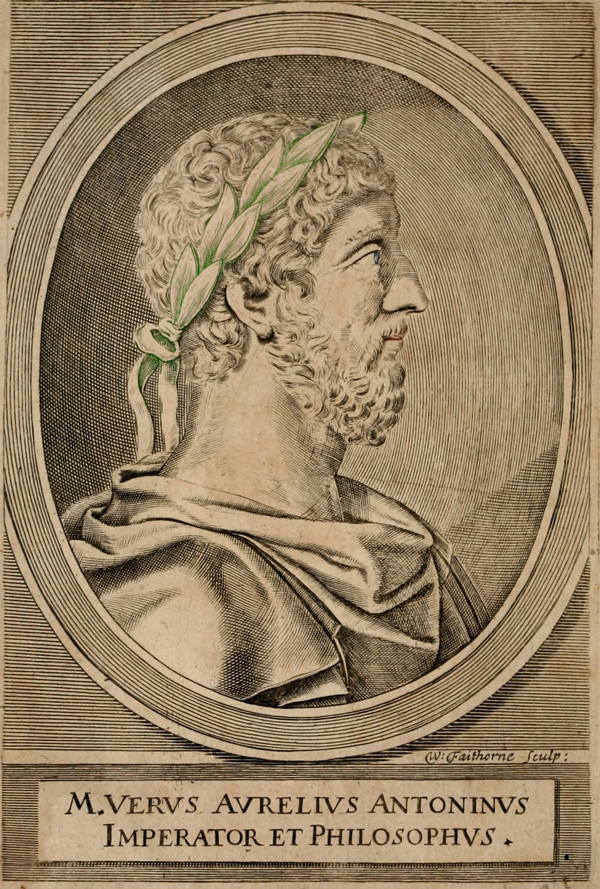
Eighteen centuries before Rilke, the great Roman emperor and Stoic philosopher Marcus Aurelius addressed this abiding human paradox of life and death with astonishing lucidity in his Meditations (public library | free ebook) — his indispensable proto-blog, which also gave us the philosophic emperor’s enduring wisdom on how to begin each day for maximum sanity and what his father taught him about honor and humility.
Aurelius, translated here by Gregory Hays, considers how befriending this eternal interplay of life and death can inform and ennoble our existential priorities:
Just that you do the right thing. The rest doesn’t matter.
Cold or warm.
Tired or well-rested.
Despised or honored.
Dying … or busy with other assignments.

Because dying, too, is one of our assignments in life.
There as well: “to do what needs doing.”
In another meditation, he revisits the question of our inescapable impermanence:
Some things are rushing into existence, others out of it. Some of what now exists is already gone. Change and flux constantly remake the world, just as the incessant progression of time remakes eternity.
We find ourselves in a river. Which of the things around us should we value when none of them can offer a firm foothold?
Like an attachment to a sparrow: we glimpse it and it’s gone.
And life itself: like the decoction of blood, the drawing in of air. We expel the power of breathing we drew in at birth (just yesterday or the day before), breathing it out like the air we exhale at each moment.
With breath-stopping simplicity, Aurelius crystallizes the inevitable and indiscriminate nature of this inhale-exhale cycle that is life:
Alexander the Great and his mule driver both died and the same thing happened to both. They were absorbed alike into the life force of the world, or dissolved alike into atoms.
But rather than being dispirited by this awareness, he suggests, we can find it in an enlivening force of moral solidity in the face of our ephemeral existence:
Keep this constantly in mind: that all sorts of people have died — all professions, all nationalities. Follow the thought all the way down to Philistion, Phoebus, and Origanion. Now extend it to other species.
We have to go there too, where all of them have already gone:
… the eloquent and the wise — Heraclitus, Pythagoras, Socrates …
… the heroes of old, the soldiers and kings who followed them …
… the smart, the generous, the hardworking, the cunning, the selfish …
… and even [those] who laughed at the whole brief, fragile business.

All underground for a long time now.
And what harm does it do them? Or the others either — the ones whose names we don’t even know?
From this he extracts the ultimate moral:
The only thing that isn’t worthless: to live this life out truthfully and rightly. And be patient with those who don’t.
Meditations is a requisite read in its entirety — the kind that stays with you for a lifetime and rewards anew with each rereading. Complement it with Seneca, a fellow Stoic, on how to fill the shortness of life with greater width of aliveness and Bertrand Russell on the paradox of immortality.